Saturday, April 27, 2013

Guitar Production Update; Godin Acoustics & Carvin Guitars part 5

More updates to the Guitar Production page.

First, adding to last weeks entry of America's "big-3" acoustic guitar companies, is a tour of Canadian builder, Godin Guitars acoustic factory.

Next is the much anticipated addition to The Tone King's custom made Carvin guitar. Follow Jeff Kiesel as he shows us the next step in the guitars creation; Final Body Construction. This is the last step of construction before it is handed off to the paint shop.


There are very few family owned & operated companies in America today. carvin is one of them. Originally founded by Lowell Kiesel in 1946. Lowell passed away on 28 Dec 2009, but the company continues to be a family venture:

Eldest son, Carson Kiesel is President of Carvin, and in charge of electronics design & production.

Mark Kiesel is Vice-President, and in charge of guitar and bass design & production.

Jon Kiesel is also Vice-President, and responsible for speaker cabinet design & production.

Grandson Jeff Kiesel is Director of National Sales.

Grandson Joel Kiesel is Director of International Sales.

Granddaughter Kristen Kiesel Lieurance is a production engineer with Carvin.

I really appreciate Carvin's connection with their family, their employees, and the community-- not to mention their unique business model. It really is a move toward socially sustainable living; a topic I will explore in more depth in the weeks to come~

Enjoy!

Friday, April 26, 2013

Exotic Tone Woods From Paul Reed Smith's Private Stock

PRS Private Stock wood tour. Some of the most exotic woods Paul Reed Smith has been stashing away for 15+ years

Watch for a single piece of maple that features quilted, and flamed figuring ;)


PRS Vault collection woods. This HD video features Paul Reed Smith showing off some of the most incredible examples of tone-woods. He matches woods for electric, and acoustic guitars, demonstrating the tonal properties of each piece of wood. Even the neck blanks sound like bells. Amazing stuff!


Stuff that dreams are made of!

Enjoy!

Wednesday, April 24, 2013

Describing the Sound of Wood

In this video from Gourmet Guitars, Master Luthier John Monteleone talks about the sound of wood. As a bonus, Woody Mann plays one of John's beautiful arch-top guitars


Ever wondered what happens to maple for it to produce a quilted top such as this?
Some people on Internet forums say the amount of figuring in the wood is attributed to the way the wood is cut, while others assert that this feature is genetic. 

This video from Taylor Guitars should clear everything up. Bob Taylor describes why some maple is flamed, curly, or quilted. 

Lastly, 
A video from The Tone King

We get an inside look at the wood shop of Carvin Guitars in San Diego, CA.
Learn about spalted maple, book matching, body & neck building.


Enjoy!

Monday, April 22, 2013

Updates: Guitar Production videos

Updates to Guitar Production!

Recently added factory tour videos of:
Taylor
Martin
Gibson

     Watch how each company employes a unique approach to building acoustic guitars from the selection of woods, through the building process and to final assembly.

     Check back often as I am continually posting updates, and adding material. I've also got some new pages in development, book reviews, and manufacture interviews all on the way soon.

     Next week the main theme will turn to music, and all the benefits thereof. After all, these guitars are more than beautiful pieces of art-- they are tools for making music.

Sunday, April 14, 2013

Sourcing Spruce; Taylor Guitars video


Happy Acoustic Day!

Where did your guitar live before making its way to you?


     The wood used to make your acoustic guitar lived in the forest where it endured three or four hundred years of droughts, fires, storms, and generations of people. How did it become part of your guitar?

     This video from Taylor Guitars demonstrates how the wood—spruce in this case— makes its way from the forest to the builder.

Taylor guitars: Sourcing Spruce pt. 1

     Next, Bob Taylor explains how the wood now at his shop, is selected, cut, and used to make your guitar. 

Taylor guitars: Sourcing Spruce pt. 2


     An incredible amount of work happens before your guitar is born. It will likely give you a new appreciation for the guitar you’re now playing.

Friday, April 12, 2013

KIM WALKER 03 | Tap Tone Wood

Tone woods. What are they? It's just wood... right? In this video master luthier Kim Walker demonstrates the different tones each wood time provides. Its best viewed in HD, and listened to with headphones ;)

Keep checking in for more updates~


Thursday, April 11, 2013

Review: Partners in Mahogany Crime


        Forested lands worldwide have been exploited for decades. This 2001 Greenpeace report on illegal supply/trade of mahogany from Brazil provides a solid foundation for us to understand what has happened in the past, and for us to put into context what is currently happening. While there have been significant improvements in the eleven years since this report, much of what is described here continues to this day. As a history teacher of mine once said, “we must study and learn from our past to understand our present, which then prepares us to shape the future.”

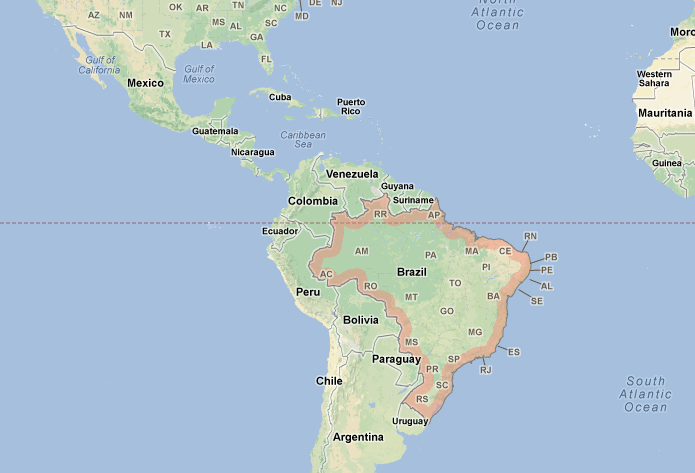
According to the report, 80% of all Amazon timber is illegally harvested, and points to widespread corruption as one of the key factors. The report focuses on the Brazilian state, Para-- the largest mahogany producing region in Brazil-- and the two key personalities involved in Brazil’s illegal mahogany trade: Osmar Alves Ferreira, and Moises Carvalho Pereira.

Demand:
Since demand for mahogany primarily comes from the United States, Europe, and Japan, the timber must be exported to supply the demand. Five export companies have been linked to Ferreira, and Pereira. Combined, these companies are responsible for approximately 80% of Para’s exports. 

Where there exports, there are imports. Of them, DLH Nordisk is identified as one of the world’s largest international timber traders. The report identifies DLH as having dealings with the export companies operated by both, Ferreira, and Pereira. Greenpeace and other NGOs have also linked DLH to arms trafficking in Liberia earlier in 2001.
Mahogany is widely used for backs & necks
of both acoustic & electric guitars
Much of the demand for mahogany is from manufacturing, with furniture manufacturers being the largest user. For example, a great deal of the demand comes from furniture companies such as Ethan Allen, and Stickley, among others. Are they importing illegal timber? There is no way of knowing for sure because one of the key problems identified in the report is the lack of a reliable legal chain of custody. Considering that 80% of the timber exported is done so illegally, they may be doing so unwittingly. The next largest users are makers of window and doors, and coffin makers. Guitars account for a very small fraction of the users.

The crime:
Where there exists a large demand, there exists the opportunity for crime. Because mahogany is so valuable, the report calls it the, “green gold of the Amazon.” The area of Brazil known as the “mahogany belt” covers roughly 197 million acres, stretching from the south of Para, through Mato Grosso, Rondonia, and southern Amazonas. It is common for illegal logging to bulldoze access roads far into untouched forests to gain access to a single mahogany tree. These illegal roads are often the first step to colonization of forests. For example, the report cites the president of the Tailandia logging industry association, who “sees the introduction of soya plantations to Southern Para as the industry’s future once the logging is finished.” 

To provide a larger, more tangible context for this crime, the report presents this example:

“Although illegal, it is not unprecedented for Indians, including some members of the Kayapo, to allow loggers onto Indian land in order to make some meager earnings themselves. However, while Indians receive at best R$80 (US$30) per tree, the sawn timber from that tree then sells on the export market for upwards of US$3,300. This same tree supplies enough mahogany timber to assemble between 12 and 15 twelve-seater solid mahogany dining room tables, which wholesald for US$4,150 and retail to the public for US$8,550 each.”

Granted, what is not included in that equation is the time and labor required to build the dining room tables, though it is clear that the people of Brazil are being sorely underpaid for their timber. I can’t help but wonder what effect paying a fair price for the trees would have on the demand… would it decrease demand for mahogany, slowing the harvesting of trees, and decrease its attraction to criminals…? 

Instrument grade mahogany comes from old-growth
forests, between 300-400years old
The land mentioned above, is called the “Middle Land.” It is the size of Austria, and is one of the largest undisturbed areas of the rainforest in the Amazon; between the Xingu and Tapajos rivers. It is supposed to be protected from all industrial exploitation by the Brazilian Constitution. The motive of course is the potential for big money by illegally logging their land. It is common for loggers to negotiate for trees they illegally took down after entering the land illegally. Lawyers for the native people say “they’ve never seen a fair and legal contract for mahogany logging.” Many of their people who have taken direct action attempting to stop the loggers have been murdered for their opposition. 

One way the forests are being exploited is through laundering. The Brazilian government issues Forest Management Plans (FMP) as a means intended to control logging. Sections of land are given an estimate of mahogany volume, allowing a specific amount to be harvested. Because of poor oversight, and corruption the estimates are wildly inflated, thus providing the loggers with enough “legal paperwork” to cover the trees illegally harvested. That also provides them with paperwork that conforms to government guidelines and the appearance of legitimate practices. The report mentions that Brazil has revoked many of the FMPs, but their agencies are under funded to make significant differences.

So what is being done? 
A world governments meeting was scheduled to take place in April of 2002, in The Hague, NL to write a 10-year plan to protect forests. Previous to that was a Convention on Biological Diversity (CBD) where 180 governments formally committed to protect ancient forests. Greenpeace called for a moratorium on industrial logging, and to create a global ancient forest fun of at least $150B annually. Among other things, they requested Brazilian mahogany to be upgraded in the Convention on International Trade in Endangered Species (CITES) Appendix III listing, to Appendix II to allow governments more control over trade. Keeping in mind this report was written in 2001, we have the benefit of reflecting on the last eleven years to see how far we have come. There have been many improvements in that time, but illegal logging remains a serious threat to many of the tone-woods used in guitars; not to mention the devastation caused to the forests and the life that depends upon them.

The report mentions very little about guitars specifically, as guitar manufactures represent a very small portion of the overall demand. However, guitar builders and players can have a huge impact in being part of the solution~